SANTA CRUZ >> New fire safety rules will impact thousands of Santa Cruz County homeowners, but the details still haven’t been finalized, leaving residents scrambling for answers.
The new rules could require residents in areas at risk of wildfires to remove all flammable material within 5 feet of their homes including wooden structures like fences or sheds, tree branches, shrubs, leaves and grass.
The California Board of Forestry and Fire Protection has been working on the new “zone zero” regulations since an executive order from Gov. Gavin Newsom that followed the devastating fires in Los Angeles this summer. Though the order set a Dec. 31, 2025 deadline to finalize the regulations, board officials have said they aren’t finished yet.
The rules will take effect immediately for new construction, and homeowners will have three years to bring their properties into compliance. The new rules are expected to be adopted in 2026, and existing properties may need to be compliant by 2029.
These rules tighten defensible space requirements for state responsibility areas, where Cal Fire is mandated to protect, as well as “very high fire risk” regions in local responsibility areas. Nearly all of Santa Cruz County’s unincorporated areas are part of the state responsibility area, including most of the Santa Cruz Mountains, North Coast and Soquel and Aptos hills.
Existing defensible space regulations require brush clearing, the removal of dead trees and other measures within 30 feet to 100 feet of homes or to the edge of the property line, an area referred to as zone two. Pruning, brush clearing and removal of firewood piles is required within 30 feet of a home, known as zone one. New requirements for zone zero are expected to tighten requirements within 5 feet of a home.
The regulations fall under California Public Resources Code 4291. Not complying with these regulations could result in a lien on one’s home to pay for the removable of flammable materials.
Homeowners brace for stricter requirements
Ann Thryft’s Boulder Creek home is surrounded by trees, with leaves, bark, and other natural debris falling year round. Thryft said it’s almost impossible to keep her yard cleared all the time, with leaves and dust continuously accumulating. Hiring someone to maintain it could cost hundreds, if not thousands of dollars, she said.
“How do low income and fixed income people pay for this? It’s thousands of dollars,” Thryft said. “Here I am, in my little home with a reverse mortgage, with a small savings account which is tagged for other things, and suddenly I’m told I have to spend thousands of dollars or else I have a lien on my property.”
Thryft first learned of the incoming regulations in September, while applying for a Recover California home hardening grant. Even though the zone zero requirements haven’t been finalized, they told her she would need to install gravel around her house to meet the future requirements. The gravel would also need to be regularly raked of leaves and natural debris.
Thryft is a member of the environmental committee of the Valley Women’s Club of San Lorenzo Valley, which wrote a letter of opposition on Oct. 30 to the state board. The committee’s main request is for the state to give residents more time to learn about, read and give feedback on the draft regulation.
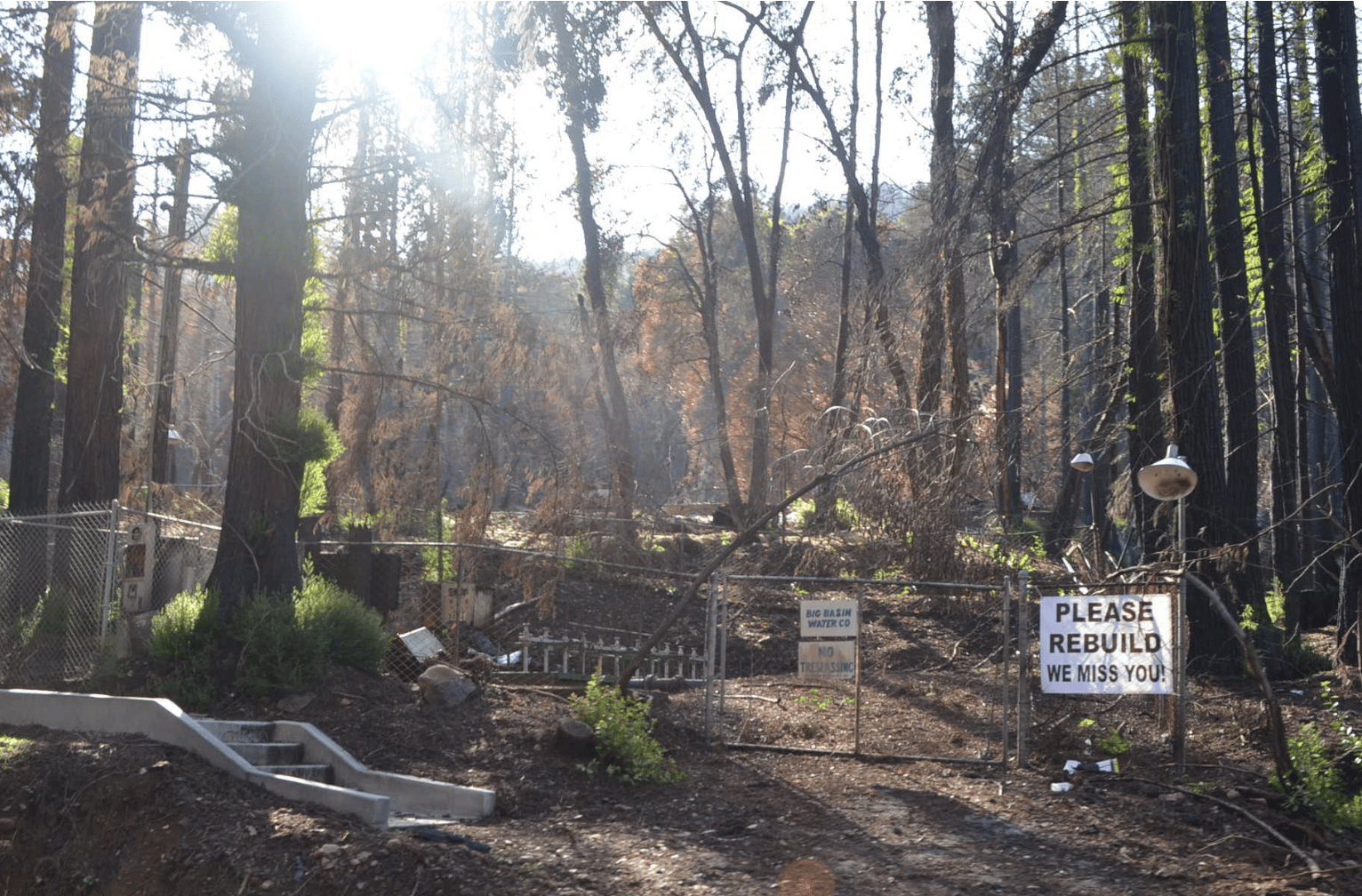
A wooded area in Boulder Creek damaged by the CZU Lightning Complex Fire is fenced off in early 2021
Marcie Yates, land use planning program manager with the Board of Forestry and Fire Protection, said the committee tasked with writing the new rules hasn’t started the formal rulemaking process yet, so it’s uncertain when the new regulations will take effect. She said the committee is focused on improving the regulations’ affordability, for homeowners and for local officials who have to enforce and educate residents about the new rules.
Yates said the committee welcomes public engagement, and specific suggestions to the draft regulations are especially helpful to committee members.
“The most helpful type of input that we can receive from the public is reading the actual [draft rules] and giving us suggested language, if there’s any kind of suggestions on how we might be able to word something differently,” Yates said. “The public is the one who’s going to be reading the regulations and trying to decipher them.”
The advisory committee held its last meeting of the year on Dec. 8 and will not be reconvening until March 2026, according to Yates.
Meeting agendas are posted 10 days in advance, and there are virtual public comment options. Notes and recordings of previous meetings are available on the committee’s website, so residents can see past conversations around the regulations. Residents can send emailed public comments to [email protected].
Summary of the Draft Zone 0 Regulation Language (California Board of Forestry)
What Zone 0 Is
Zone 0 refers to the 0–5 feet immediately surrounding any structure. This is the area most likely to ignite a home during a wildfire due to wind‑blown embers. The draft regulation creates a new, mandatory “ember‑resistant zone” for properties in:
-
State Responsibility Areas (SRA)
-
Very High Fire Hazard Severity Zones (VHFHSZ) in Local Responsibility Areas
Core Requirements in the Draft Language
1. Remove or prohibit all combustible materials within 0–5 feet of structures
This includes:
-
Wood mulch
-
Wooden fences attached to the home
-
Wood piles
-
Flammable vegetation (shrubs, grasses, dead leaves, pine needles)
-
Plastic items, outdoor furniture, or décor that can ignite
The intent is to eliminate anything that can catch an ember and transfer fire to the structure.
2. Allow only “ember‑resistant” materials in Zone 0
The draft rules permit:
-
Hardscape (gravel, stone, concrete, pavers)
-
Non‑combustible fencing or fence sections within 5 feet of the home
-
Well‑maintained, non‑flammable plants (with strict spacing and moisture requirements)
Trees may remain only if maintained so that no branches or litter accumulate within the 0–5 foot zone.
3. Apply the rules to all structures
This includes:
-
Homes
-
Garages
-
Sheds
-
Accessory dwelling units
-
Decks and attached structures
If it can burn and it’s within 5 feet of a structure, it must be removed or replaced with non‑combustible alternatives.
4. Enforcement and compliance
The draft language outlines:
-
Annual inspections
-
A phased implementation timeline
-
Enforcement through local fire authorities
Although Newsom’s executive order set a Dec. 31, 2025 deadline, state officials now estimate final adoption closer to 2029 due to complexity and public feedback.
5. Purpose of the Regulation
The Board states three primary goals:
-
Reduce home ignitions from embers, which cause the majority of wildfire home losses
-
Improve firefighter safety
-
Create consistent statewide defensible‑space standards
6. Key Concerns Raised by Homeowners
Based on reporting from Santa Cruz Local and KQED:
-
Cost of replacing fences, decks, and landscaping
-
Uncertainty about what will ultimately be required
-
Applicability to dense urban neighborhoods
-
Insurance implications
-
Lack of clarity on exemptions or financial assistance
-B. Sakura Cannestra, Santa Cruz Local, January 5, 2026